
2026 June❮❮prevnext❯❯
2026.06.01
Open Photo Gallery









I have a lot of ambivalence about Jordan Peterson but there's a lot to chew over in this:
it's really useful to investigate the viewpoints of people who have opposing views to yours because they'll tell you things - not only will they tell you things you don't know it'll also tell you how to see the world in ways that you don't see it and they'll also have skills that you don't have
but agreeable people especially if they're really agreeable, are so agreeable that they often don't even know what they want because they're so accustomed to living for other people, to finding out what other people want and to trying to make them comfortable and so forth that it's harder for them to find a sense of their own desires as they move through lifeThis one especially is on my mind, as I try and explore if "anhedonia" - not feeling pleasures as sharply as most folks - might be cause rather than an effect of my "group think" and looking to objective corectness through the group.
2026.06.02
I used to read a blogger who insisted that "All right, I'll go to Hell," from Huckleberry Finn is the most pure and perfect prayer in the canon of American literature. Meaning, as I understand it, that the decision to do the right thing in the face of eternal damnation is the most holy decision one can make, and if God Himself is not proud of the poor mixed-up kid, then God Himself is not worth much more than a "Get thee behind me," and the rest of us should be lining up to go to Hell too. Worth noting that this person identified as an evangelical Christian, not because he was in line with what current American evangelicals believe, but because "they can change their name, I'm not changing mine."
2026.06.03
2026.06.04
FEMALE VOCALIST COVERS:
* Crazy (James Michael Mix) (Alanis Morissette)
SONGS I RAN INTO IN SICILY:
* Scarabocchi (Olly & Juli)
* Tarantella (Gabry Ponte & KEL)
* Via con me (Parma Brass Quintet)
* Jailhouse Rock (Elvis Presley)
* Hot Stuff (Banda Brasileira)
* People Get Up and Drive Your Funky Soul (James Brown)
I'm a little annoyed that James Brown leaves out 3 or 4 signs including Aries.
FEMALE VOCALIST COVERS I RAN INTO IN SICILY:
* Time After Time (Lennon Stella)
* mad world (Au/Ra)
* Killing Me Softly (Melania)
* The scientist (Bea)
OTHER SONGS:
* Takio's Sohran 2 (Takio Ito & TAKiO BAND) - from a group of Japanese exchange students tour
* NAILS (feat. Missy Elliott) (Noga Erez) - from the show Big Mistakes
2026.06.05
2026.06.06
The book starts with a kind of a tour of theistic arguments from cosmology:
* the idea of a steady state universe was a lot more friendly to the materialist viewpoint, but evidence for the the Big Bang came along in the 20th century (which you know, seems to match the vibe of Genesis, as long as you give it a wide enough poetic interpretation.)
* and while there was some hope a Big Bang / Big Crunch cycle might be a kind of recurrence, lately it's been looking like a Heat Death fizzle
* The book spends a weirdly long time on 20th-century ideological pressure around cosmology -- especially communist materialism, and more broadly authoritarian interference with science.
* The old fine-tuning of the universe arguments are here. To me it sometimes seems like drawing a bullseye around where the dart landed, but I guess we had a lot more paths to the universe just being undifferentiated hot glowing plasma or whatever.
* And so the book also takes a lot of time to dismiss "multiverse" or "recurrence" type variations, as just being unscientific guesswork as to what might be "really out there". (I mean I think the assumption it's Just God has the same problem?)
* Like if it wasn't for relativity (and measurable time dilation etc) I would just assume Time wasn't, like, a thing - it was just an overlay describing cause and effect. But when you get to the Big Bang era, it's not clear if cause and effect has the same kind of meaning at that point.
The book then shifts into a more "and so Christianity is probably right mode":
* Some of the problems with Genesis fade away when you take it poetically and the limitations of ancient Hebrew into account.
* I've always found CS Lewis "Liar, Lunatic, or Lord" rhetorically fun but logically too "excluded middle". It depends on a very sure idea of what Jesus said about himself, how quickly the New Testament locked into place, and whether later theological interpretation can be cleanly read back into the historical Jesus.
* The whole Jewish experience, ability to remain cohesive as a culture despite the diaspora, the seeming massive improbability of coming back together as Israel in the 20th century - seems to go in line with some of the prophetic aspect of the Bible.
* Something weird happened at Fátima.
* You need God to have morality that's beyond just "pick what feels right"
* Ye olde why is there something rather than nothing: "the Universe, as well as any contingent reality known or unknown to us, was caused by a necessary, simple, unique, immaterial, atemporal, uncaused, all-powerful, and intelligent being. It doesn't seem too much of a stretch to call that being "God"!" - the atemporal and uncaused aspect is definitely tying back to that cosmic cause and effect. I'm not sure the argument of why it has to be intelligent or conscious (especially in any way we understand that) holds up though.
It also takes some time to recapitulate some Materialist arguments - maybe just straw men, but it reads pretty well.
So I dunno. I was looking around online for reviews and refutations. A lot of the stuff you find on like Atheist Reddit boils down to "same old arguments" and "I didn't even bother to read it", which I find kind of lame.
I wish I had more comparative religion study, to know if say the Judeo-aspect was as unique as they imply (they give some lip service to the counter: "Some have argued that [the Jewish people's exile] story is not all that unique, citing possible comparisons with the Armenians, Lebanese, Polish, or some Africans in America who returned later to Liberia.") I mean one thing I've always respected about Hinduism is that it gets the scale of billions and trillions of years closer to what we see than most non-very-poetic readings of Genesis...
But I'm struck by how much rests upon the idea that "the Bible has been protected by God", that somehow it's not a semi-arbitrary assemblage by human curators. And from like a meme-point of view "inerrancy" is a strong if brittle strategy. But strident atheists would throw it all out; most folk Christians would keep it all in. (I think about the Thomas Jefferson take on the bible, where he tried to bring forth the teachings and leave out the miracles and supernatural.)
It's odd to me how much American folk Christianity depends on extra-biblical imagery while also insisting on biblical inerrancy. Ideas like instantly winging off to St Peter at the pearly gates (vs basically being "asleep" til doomsday) seem... just kind of made up? Like isn't that what looking for heresy is meant to be, a defense against folks just making things up?
(I still love Alan Lightman's book "Mr. g" - the idea of an experimenter god making universes without the level of simplistic "well god just knows everything, past and future" - (yet still bothers to create the world even though he knows it will turn out.). In Mr. g god is very loving, and well nigh omnipotent especially relative to critters in his creation, but still chaos and unintended consequences have their say, and a kind of devilry enters even his best universes.)
So where did I land? People prone to belief will probably find this book has bracing arguments, people more skeptical will probably still be skeptical. At any rate I appreciate the approach. No one knows why there's something rather than nothing ("Why is there something rather than nothing?" – "And if there were nothing? You'd still be complaining!") but I guess I'll always have the problem of faith - less that I'm right but the chutzpah of saying so many other people were wrong.
2026.06.07
The evolution of the world can be compared to a display of fireworks that has just ended: some few red wisps, ashes and smoke. Standing on a cooled cinder, we see the slow fading of the suns, and we try to recall the vanishing brilliance of the origin of the worlds.
2026.06.08
Open Photo Gallery


2026.06.09
His design rules for Mega Man 2 were specific and deliberate. Enemies appeared in small waves, three or four at a time, using the same attacks, so players could actually learn the pattern. Terrain and placement adjusted the challenge, not random enemy behavior. And here's the detail that reveals everything. The last enemy in each wave was easier than the ones before it. I'll say that again on purpose. The final enemy in a wave was easier. Why? Kamura explained the psychology this way. He'd notice that people don't replay games, even good ones, because when they think back, their minds go to the hardest parts, and that memory makes replaying feel like work. He didn't want players remembering Mega Man 2 as a slog. He wanted them to remember feeling like they were getting better. And then he said something that is essentially the entire point of this video. I quote, "I wanted the player to feel like he was improving at the game, too."Although it calls out "Battletoads" as being brutal relative to Mega Man in part because of having 3 continues / no passwords (along with punishing "gotcha"/ MUST memorize design) it underplays the addition of continue password grids as being a HUGE quality of life improvement in Mega Man 2 over 1.
I remember my pride in beating the original "Nintendo Hard" Mega Man, telling my mom about it - an early lesson in keeping at a humbling challenge until I beat it.
Also I think about Mega Man in the sense of novelty. Not only was it a master class in terrain and enemy placement as "something new", but of course it was one of the first to give you an array of weapons with different mechanics. Later games (such as Kirby) would expand that so that it let the player control novel mechanics and interactions (often by capturing those of enemies) as the game progressed - now it's one of the biggest tools Nintendo has, from Kirby's inhales, to Mario Oddyssey's Hat Capture, the new animal transformations, etc.
So there probably is a split - most games provide some kind of novelty as they progress. Some games, like RPG, it's gradual and cumulative, and intrinsic to the character or the inventory. Other games, it's closer to a temporary toy (or in the case of GTA, knowing where the good toys are.)
2026.06.10
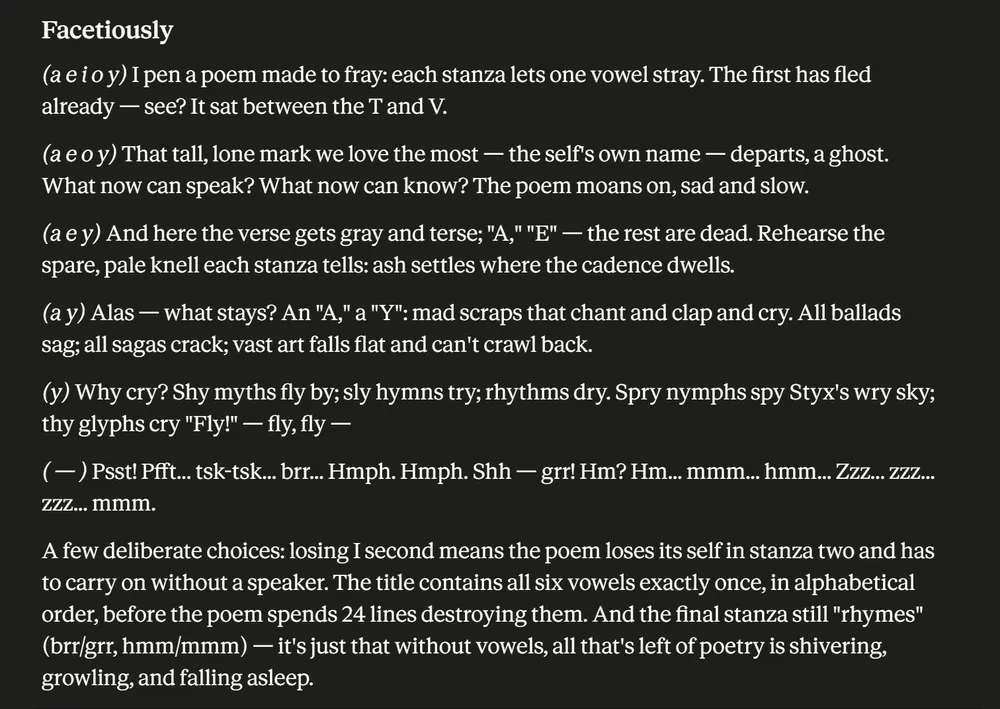
Fable: "write me a rhyming poem with six four line stanzas, each stanza removes another vowel. the first has no u, the second no u or i, etc."
2026.06.11

2026.06.12

2026.06.13
2026.06.14
The Orangevia via Gladdest Thing I should read more there
At lunchtime I bought a huge orange--
The size of it made us all laugh.
I peeled it and shared it with Robert and Dave--
They got quarters and I had a half.
And that orange, it made me so happy,
As ordinary things often do
Just lately. The shopping. A walk in the park.
This is peace and contentment. It's new.
The rest of the day was quite easy.
I did all the jobs on my list
And enjoyed them and had some time over.
I love you. I'm glad I exist.
2026.06.15
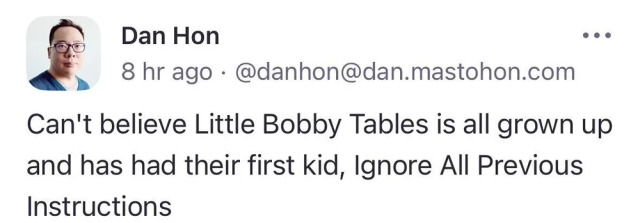

man. i honestly thought we were more or less past this stage, or it was at least tough to provoke this kind of hallucination

2026.06.16
The Hitchhiker's Guide to the Galaxy is probably the perfect book for this moment in software, because it is basically about trying to survive inside a universe that is absurd, bureaucratic, overconfident, badly documented, and somehow still convinced it is operating according to a plan. Douglas Adams understood that sometimes the systems around you are not secretly intelligent, they are just stupid at a scale too large for the human brain to process.Douglas Adams was so ahead of the curve, from predicting how annoying gesture based computing could be, to outlining how insanely reckless fast-evolving code would be to how programming is like teaching a very dumb student (and when done right, sharpens the teacher's understanding more than the student's) and how many of us can share the vibe of being "rarely happier than when spending an entire day programming my computer to perform automatically a task that would otherwise take me a good ten seconds to do by hand"
2026.06.17
2026.06.18
Then: Nearly 160 sick with flu at US air force base after Hegseth ends mandatory vaccines
2026.06.19
Bummed about how the company I was a contractor for switched from a "yeah contractors can be become fulltimers" to a cycle of binge and purge. somehow stinging a bit mroe because i found one contractor on my team is avoiding the axe, probably mostly because of what vendor company he is under
I tried to think in terms of silver linings:
* By dialing in to the knowledge dump meeting I got to be The Guy for PFD, a diagraming tool that was particularly more interesting that the usual web forms
* More time w/ classic sprint / agile bona fides, (not sure that is any kid of differentiator these days on the market but still, I've had worse).
* Took advantage of some pretty significant CoPilot time, and learned how it will be a game changer - both in terms of increasing fraughtness about what the job market looks like but also honestly helping deal with some complexities UI as a field has made for itself
* GQL on my CV
* worked with some great folks
* a bit of insurance industry knowledge
* kept food on table for a year and a half
* also some more self awareness in that - I talk a lot. For good or ill, my manner is very much consensus building and "show the work"
pretty fricking annoying gray cloud tho
2026.06.20
And it looks to me as though everyone in Civilization is operating heavy machinery every day, by our standards. That time when the guy stops at the barber for a shave, I bet it is with the atomic clipper, which by a million tiny rays of incomprehensibly powerful fourth-order radiation annihilates the hair microscopically straight down to the root. So horrific were the energies concentrated upon every follicle, that it not only was vapourised, but each particle was individually propelled into nega-space without leaving even one atom of vapour to trouble the hair's owner; and yet the energies were in perfect balance - the customer being shaved felt not even the slightest sensation of warmth upon the skin - as, indeed, he would not feel it if the balancing bar were misaligned, and the Titanic force misdirected to blow his head into tiny pieces, and, a moment later too small to measure, the barber shop and the entire city, also. Yet such was the reputation of the Engineers of Civilization that not once had this happened anywhere on the planet!
2026.06.21
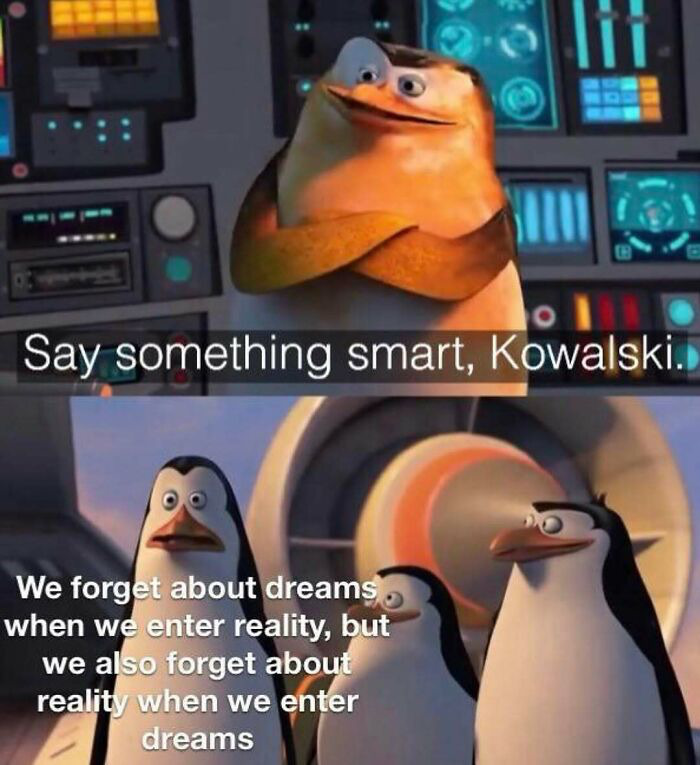
2026.06.22
A lot of conservatives are in "Starsky and Hutch" mode and restrictions on high speed chases seem stupid to them. "What, and let the dude just drive off??"
Like... yes. That's why we have license plates and vehicle tracking.
Same approach we take to war diplomacy. We go with gut feels of "bombs'll fix it!" and lo and behold, it doesn't work.
2026.06.23
2026.06.24

2026.06.25

2026.06.26


2026.06.27
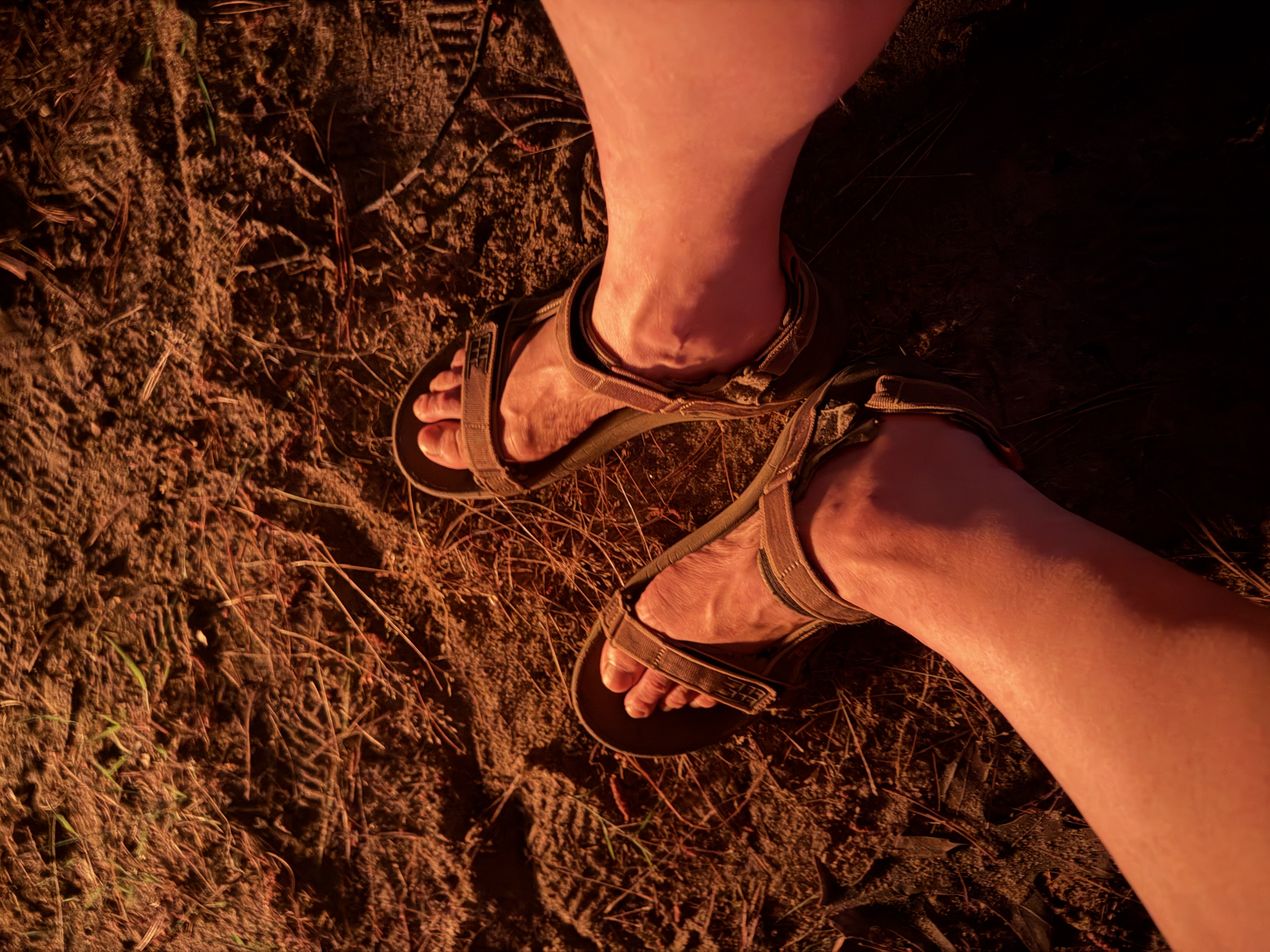
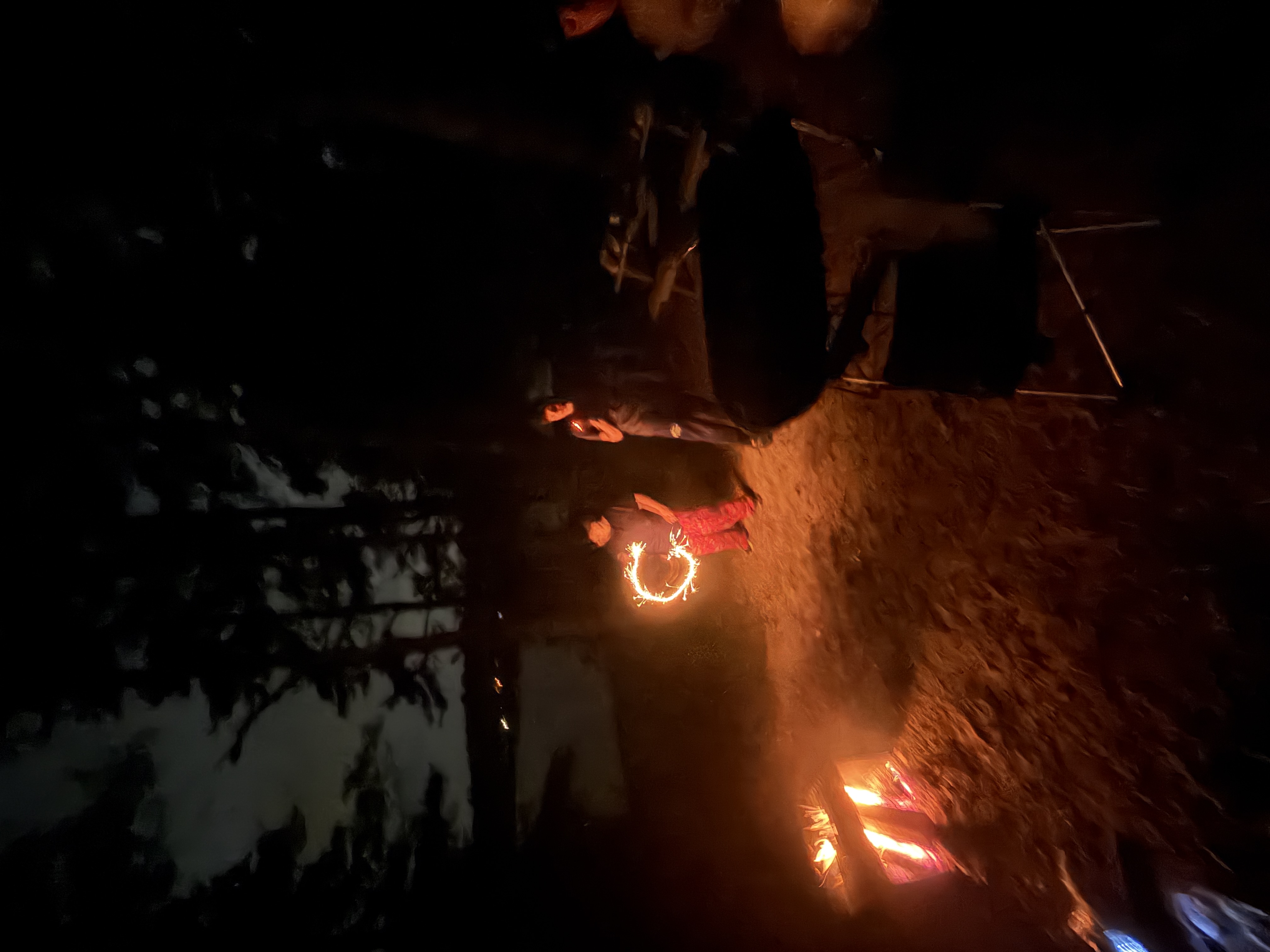
Open Photo Gallery

2026.06.28
Open Photo Gallery





2026.06.29
Sometimes his works are so short and to the point they're flash fiction, and for me that's an awesome space for science fiction.
Immortality cannot be derived from one's solitary knowledge of one's greatness.
I'd recommend the 99 cent "Fredric Brown MEGAPACK"
2026.06.30
Check out her solo artist work or her later stuff with the Titanic Dance Band
You can't write about grease paint and puddles of lovers or chained moons or brandy on knuckles or insanity but if you take a hot enough bath and lie on your back you can feel your blood swimming the crawl through your ass and if you play steel strings long enough you can feel your blood waltzing through your fingertips and if you let yourself laugh loud and hard enough so you're crying and peeing your pants you can feel your blood painting a self portrait on your stomach and it's a beautiful feeling
I took a 60 hour bus ride from rhode island to montana by myself and met a boy who bought me candy in fargo and said have a nice life and it would have made a great poem of passing except i ran into him again on a bus going to florida and it was as if fate had brought me back to that stringy tripping tongue studded sweetheart but he didn't remember the chocolate incident
This sticky stuff needs anger and passion and my stamp card isn't full yet but maybe if i could hate things worse than spinach and thunder i could be okay but spinach isn't so bad in pastries and thunder has a calming sensuality that i want to rip out of my ears so i can say thunder's the burning coals on my eyelashes and the ceramic clams in my fingernails making their way to my hair filling me with kasha and rhinestones
I went bowling with an old friend once and lost and that night he asked if i wanted to take the physical challenge or sleep and i couldn't for the life of me figure out what was so challenging about him when it was clear if i went to sleep he wouldn't call and if i took off my clothes he wouldn't call because we didn't keep in touch and anyway i wouldn't want to be the web of butterscotch between his hangnails
I only keep my shades in a jar so the tree on my desk can get light otherwise i'd spend all my time pining about a boy who could touch both my thumbs with one hand wear butterflies like he grew them in his eyes and kiss my ear like it was a flag but maybe i just need more sex in my life or cigarettes or salmon or Stephen but i think if i could just duct tape all of them to the bottom of my shoe my feet'd get some mileage